Underground Railroad
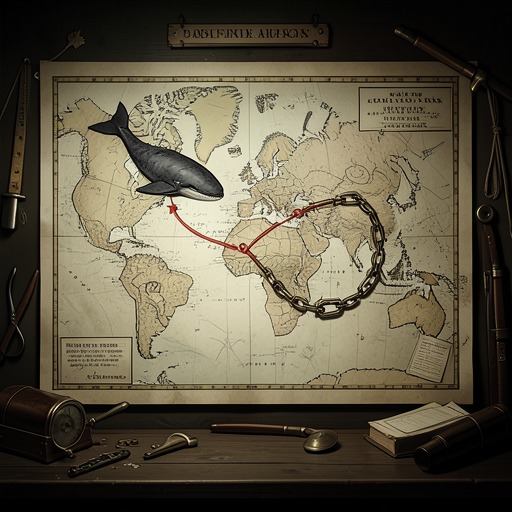
The WhaleThe Underground Railroad was an invisible system of secret assistance that helped thousands of enslaved people escape to the North and Canada. In New Bedford of Whaling's Decline and Whale-Oil Industry Debates, the port’s whaling trade gave this network a distinctive setting: ships carried workers across long distances, while the movement and disguise associated with maritime life could help fugitives evade notice. The city was at once a center of exploitative labor and a place where escape could become possible.
A hidden network in a working port
The Underground Railroad operated covertly, rather than as a visible public institution. New Bedford of Whaling's Decline and Whale-Oil Industry Debates was a vital stop within it, and the port’s position made it well suited to secret movement. The same year Frederick Douglass arrived there, in 1838, the city was connected by rail to the New England network. That railway connection and the Underground Railroad were different systems: one linked the city to regional transport, while the other secretly helped fugitives reach safety. Their coincidence underscores how ordinary routes and a busy port could acquire a second, concealed use.
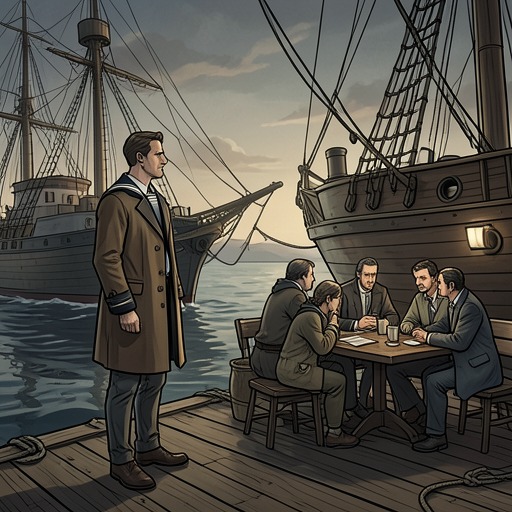
Whaling also offered employment and a tradition of disguise. A whale-ship might conceal its purpose by appearing to be a man-of-war, and some whale-ships sheltered fugitive slaves. These practices did not make the whaling industry an abolitionist institution; rather, the trade’s mobility and capacity for concealment could be turned toward escape even as whaling and slavery remained entangled, lucrative maritime industries.
People and routes through New Bedford
Frederick Douglass arrived in New Bedford of Whaling's Decline and Whale-Oil Industry Debates after escaping from Baltimore dressed as a sailor. He remained for four years, finding work in demanding trades that included rolling casks, stowing ships, sawing wood, sweeping chimneys, and working at a blacksmith’s bellows. His experience shows that the city served not only as a point of passage but also as a place where a fugitive could build a working life. The account presents New Bedford as a near approach to freedom for Black people, while making clear that this relative security depended on leaving slaveholding territory.
Henry ‘Box’ Brown’s escape supplies another example of the routes and disguises associated with the network: he was smuggled out of the South in a crate and emerged at his destination in the North. His journey, like Douglass’s sailor’s disguise, depended on concealment and movement between places. The two escapes are distinct, but together they show how the Underground Railroad’s work could take forms adapted to the circumstances of individual fugitives.
A port’s contradictions
The network’s importance in New Bedford becomes sharper against the city’s broader maritime society. By the second quarter of the nineteenth century, one in twenty residents was Black, and the port’s neighborhoods included people of African and Cape Verdean descent alongside other immigrant communities. Black sailors found work in the whaling trade, sometimes with owners whose Quaker beliefs opposed slavery, though shipboard labor remained segregated and conditions were unequal. The harbor could offer employment and a route away from enslavement without dissolving the racial hierarchies that shaped life aboard ship and ashore.
The Underground Railroad therefore belongs to a history of contradiction rather than a simple story of a free port. New Bedford’s transient maritime world could support escape, yet the same city was bound to whaling, an industry that operated alongside slavery and depended on exploitative labor. Its significance lies in that tension: a commercial port built around movement became a refuge and stopping place for people seeking freedom, even as the economy around them remained implicated in systems of coercion.